



If you’re running an LSR molding shop (or looking to start one), you know how critical it is to get the right software to control your machines—one tiny glitch in the program can mess up a batch of medical devices, automotive gaskets, or consumer goods you’ve spent hours dialing in. As an LSR molder supplier, I get asked this question all the time: what software do we actually use to keep our machines running smooth, consistent, and on track? Let’s break this down like we’re chatting over a coffee, no stuffy jargon, just what works for day-to-day molding.
First off, let’s get clear: LSR molding isn’t your average plastic injection molding. Liquid silicone is super unique—it cures differently depending on temperature, mixing ratios, and dwell time, so your software can’t just be a generic molding program. It needs to handle precision stuff like shot size consistency, cold runner temperature control, and in some cases, 2-shot molding for parts that need both rigid plastic and soft silicone. At our shop, we rely on a mix of machine-integrated software and secondary tools to cover every step, from setting up a job to monitoring it in real time.
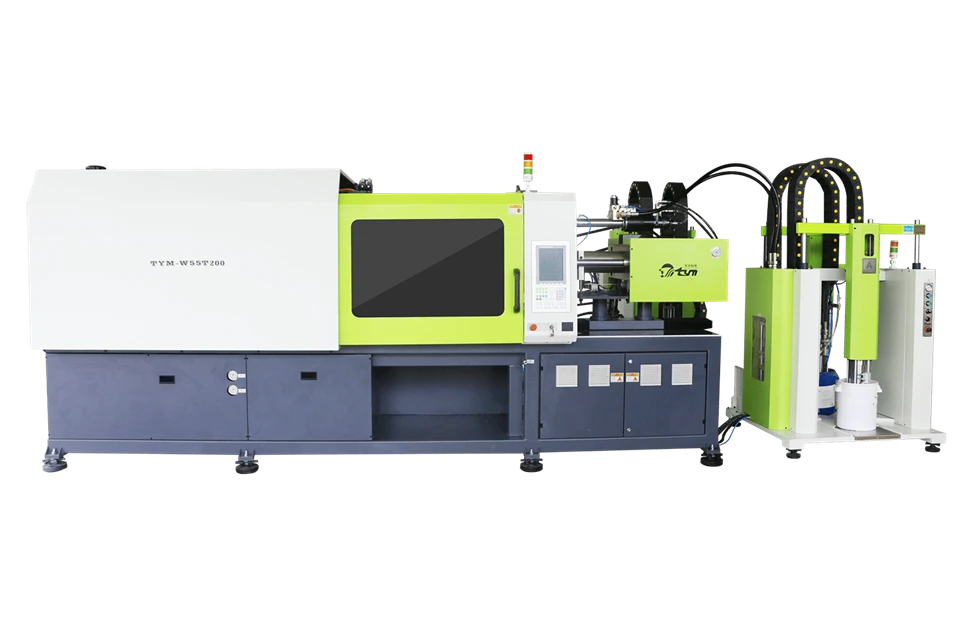
Let’s start with the software that lives right on your LSR injection machine—this is the workhorse. Most modern LSR machines (the ones that actually do the molding) come with built-in HMI (Human-Machine Interface) software that’s tailored for LSR, not generic plastic. A lot of new molders skip this and try to use plastic machine software, and that’s where problems pop up. For example, our go-to machines are the TYM-W Toggle LSR Injection Molding Machine, which runs on a proprietary HMI software tuned specifically for silicone. Wait, let me link that up so you can check the machine specs: TYM-W Toggle LSR Injection Molding Machine. This software lets us set every tiny variable: barrel temperature (we keep LSR barrels 80-100°F, way lower than plastic), cure time, injection speed, and backpressure—all with 0.1-unit precision. That’s non-negotiable for LSR, because too much heat cures it too fast in the barrel, too little leaves it soft.
For those doing 2-shot molding (like making phone cases with a silicone grip and a hard plastic frame), the software needs to sync two machines or two stations on the same line. That’s where our TYM-W55T200 2K / Double-Color Machine comes in—its software is built to coordinate two molding cycles so the first shot (say, a plastic base) is ready when the second (silicone overmold) is injected, no downtime or misalignment. I’ve seen so many shops mess up 2-shot jobs because they used separate software for each machine, leading to one cycle finishing too early or late, ruining the part. This integrated software fixes that by having a single dashboard where we adjust both cycles in real time.
Now, you might be thinking, “Okay, machine software is great, but what about when I need to track data, fix issues, or run jobs without being glued to the machine?” That’s where we add on manufacturing execution system (MES) software for LSR. Generic MES tools work for some plastic molding, but LSR needs extra fields: mixing ratio checks, cure rate tracking, and waste reduction. We use a cloud-based MES that syncs with every machine on the floor—so if a machine’s barrel temp drops 5°F, we get an alert on our phones before it causes a bad shot. It also logs every job’s stats, which is huge for quality control, especially if you’re making parts for medical or automotive industries that need traceability. You can’t just say “we made 10,000 parts” in those fields; you need to show exactly which machine, which batch, and what settings were used for each.
Another tool we use is mold flow simulation software, which isn’t “control” software per se, but it’s a must for setting up your control software correctly. Mold flow (like Moldex3d or Simcon LSR) lets you map how silicone flows into the mold, so you can adjust injection speed and pressure in your machine software before you even run a test shot. For example, if a part has thin walls, the simulation will tell you to use a slower fill speed to avoid air bubbles, so you don’t have to waste material testing settings on the machine. At our shop, we run simulations for every new job, then import the recommended parameters straight into our machine software—cuts down setup time by 30% and reduces waste a lot.
Wait, let’s talk about the small, easy-to-miss stuff: some molders use PLC (Programmable Logic Controller) software to tweak machine logic beyond what the HMI offers. PLCs handle the low-level control, like how the machine switches from injection to hold pressure, or when the mold opens. For LSR, we set the PLC to hold pressure just enough to keep silicone from flowing back out of the nozzle while it cures—too much and you get flash, too little and you get short shots. The TYM-W LSR Injection Molding Machine’s TYM-W LSR Injection Molding Machine comes with a pre-programmed PLC for LSR, which is way easier than building one from scratch. I’ve had new molders come to us with generic PLCs for their LSR machines, and they spend weeks troubleshooting; the pre-built ones take that headache away.
Let me be honest, it’s not just about the tools—it’s about how you use them. We’ve seen shops splurge on fancy software that does 100 things, but they don’t train their operators to use the LSR-specific features, so it’s useless. That’s why, when we supply machines, we include training on both the HMI and MES software—because even the best program won’t fix a bad setup if the operator doesn’t understand LSR’s quirks. For example, operators used to plastic might crank up injection speed too fast, which causes shear heat in the LSR and cures it early, leading to burnt parts. Our software has a built-in warning when injection speed exceeds the safe limit for LSR, which helps prevent that mistake.

Another common question: do we use any open-source or DIY software? We’ve tried a few open-source PLC tools, but they don’t have the LSR-specific calibrations you need. Silicone’s viscosity changes with temperature, so the software has to adjust parameters in real time as the barrel heats up. Open-source tools don’t have that built-in logic, so you’re left guessing. For us, it’s worth investing in software tailored to LSR—saves us time, reduces waste, and keeps our quality consistent.
Now, let’s tie this back to why this matters for you, especially if you’re working with a supplier. If you’re choosing an LSR molder, ask them what software they use for machine control. A reputable supplier will be able to tell you exactly which HMI, MES, and simulation tools they use, and how they integrate them. At our shop, we’ve refined our software stack over 10 years, so every job runs smoothly—whether it’s a 1,000-part prototype or a 100,000-part production run. We don’t cut corners here because LSR is all about consistency, and the software is the backbone of that.
If you’re looking to get into LSR molding, or you’re tired of your current setup causing part defects or downtime, feel free to reach out for a chat. We can walk you through our software setup, show you how we tune parameters for different LSR grades, and even help you pick the right machine for your project. Whether you’re a small startup or a large manufacturer, we can work with your needs.
References
- Moldex3d LSR Module: Simulation Software for Liquid Silicone Rubber Injection Molding
- Rockwell Automation MES for Precision Manufacturing: Quality Tracking and Real-Time Monitoring
- Machine HMI Design for LSR: Industry Standards for Injection Molding Control Software
- TYM-W LSR Machine Technical Manual: Integrated Software Specifications and Operation Guidelines