



If you’re in the silicone electrical accessories game, you’ve probably stared down that age-old question: can a silicone machine actually handle silicone electrical parts? Let’s cut through the jargon here—no stuffy whitepapers, just the real deal from someone who’s been in the silicone machine supply game for over a decade. I’ve talked to hundreds of electrical component makers, and half of their headaches boil down to mismatched equipment and materials. Let’s break this down, no fluff.
First, let’s get one thing straight: silicone electrical accessories aren’t your run-of-the-mill silicone baking mats or phone cases. These parts—think cable insulators, switch seals, sensor gaskets, or connector boots—need to check a bunch of boxes: heat resistance (we’re talking 150°C+ for industrial electronics), UV stability, electrical insulation (zero conductivity), and consistent precision. Mess that up, and you’ve got parts that fail in a month, or worse, cause electrical shorts. So, can your run-of-the-mill silicone machine cut it, or do you need something specific?
Let’s start with what a silicone machine is—broadly, equipment that processes liquid silicone rubber (LSR) or solid silicone rubber (SSR) into parts. The key here is that silicone materials aren’t one-size-fits-all. Electrical accessory silicone grades are often LSR, because it flows into tiny, tight tolerances (like 0.01mm gaps for small connectors) and cures evenly without flash—critical for parts that sit right next to live wires. Now, most people assume any silicone machine works for LSR, but that’s where mistakes happen. Electrical parts need consistent cure cycles, minimal contamination (even a speck of dust can ruin insulation), and precise material mixing ratios. Skimp on those, and you’re shipping defective parts.
Here’s the story I heard last quarter from a small electronics shop in Ohio. They used a cheap general-purpose silicone machine to make silicone switch seals for kitchen appliances. At first, parts looked fine, but 6 months later, customers started complaining about electrical leaks. Turned out, their machine couldn’t maintain a steady cure temperature for LSR, so some areas were under-cured (too soft, conductive micro-paths formed) and others over-cured (brittle, cracked when installed). They swapped to LSR-specific machines for silicone electrical accessories, and failure rates dropped by 85%. That’s the kind of real result that matters.
Now, let’s get into why silicone machines are suitable for silicone electrical accessories—when they’re the right type. For electrical parts, LSR injection molding is the gold standard, and not just any injection machine will do. The best machines here control three core variables: temperature, injection pressure, and material ratio. Let’s talk about the equipment we supply, because I know these models inside and out. Our TYM-W Toggle LSR Injection Molding Machine is a workhorse for small to mid-run electrical components—its toggle clamp design locks molds tightly, which is key for LSR, since silicone has a low viscosity and can leak if the mold isn’t sealed right. For double-color parts (like a silicone connector with a hard plastic base), the TYM-W55T200 2K / Double-Color Machine handles two materials at once, perfect for electrical accessories that need a rigid mount plus a silicone seal. And if you’re scaling up high-volume runs—say, 100k+ sensor gaskets a month—the TYM-W LSR Injection Molding Machine has automated material feeding that cuts down on human error, so every part meets electrical specs.
Wait, but can you use a solid silicone (SSR) machine for electrical accessories? Some people try it, and it works for bigger, less precise parts, but here’s the catch: SSR doesn’t flow as well as LSR, so for tiny electrical components like pin insulators, you’ll get more flash, more waste, and lower yield. Electrical accessories rely on tight tolerances to avoid conductivity issues, so LSR-specific silicone machines are non-negotiable here. Another point: electrical silicone grades often include additives (like thermal stabilizers for motor parts) that need precise mixing. A general-purpose machine might not have the accuracy to dose those additives, leading to parts that fail heat tests—again, that’s where LSR-specialized machines win.
I’ve also seen people mix up silicone machines with general rubber machines. General rubber machines handle EPDM or nitrile, which cure at much higher temperatures and flow differently. Trying to use one for silicone electrical accessories? It’s like using a cake pan to fry an egg—you might get close, but it won’t work right. Silicone (especially LSR) cures via platinum catalysis, not heat alone, so the machine needs to control that catalyst ratio perfectly. Mess with the catalyst, and you get parts that never fully cure, which is a huge electrical safety risk.
Now, let’s address the edge cases. What if you’re a small shop making custom silicone electrical parts—1k-5k runs a month, not high volume? Can you get away with a mid-tier silicone machine? Absolutely, but you still need to verify the machine’s LSR capabilities. Look for a machine that has a closed-loop temperature control system (no random spikes), a metering unit that mixes A and B silicone components accurately (±0.5% ratio), and a clamp that can hold mold pressure steady during injection. That’s exactly what our TYM-W line delivers, which is why so many electrical component startups start with our machines and scale up later.
Another common mistake: people think silicone machines are too expensive for small batches, but the cost of bad parts is way higher. A friend who runs an electrical parts distributor told me that he used to stock 10k custom switch seals from a shop using a general silicone machine—half were defective, so he lost $12k in returns. When he switched to parts made with a proper LSR machine, returns dropped to 2% and he increased his order volume by 40%. That’s the math no one talks about upfront, but it’s the real value here.
Let’s get back to the core question: yes, a silicone machine can be used for silicone electrical accessories, but only if it’s an LSR-specialized silicone machine—not a general-purpose rubber machine, not an SSR machine, not a cheap import that skips precision controls. The electrical industry has strict standards (UL, IEC) for silicone parts, and your machine has to align with those to pass inspections. For example, UL requires that electrical silicone parts have a minimum insulation resistance of 10^12 ohms at 500V. A machine that can’t consistently mix and cure LSR can’t guarantee that resistance—even a single defective part in a batch can lead to costly recalls.
Now, what should you look for when picking a silicone machine for electrical accessories? First, check if it’s designed for LSR processing. Second, confirm it has the tolerance control you need (±0.01mm is non-negotiable for small connectors). Third, look for automation features—like automated mold cleaning or material feeding—to reduce contamination (a big no-no for electrical parts). Our range covers all of that: from the compact TYM-W Toggle LSR for small shops to the high-volume TYM-W for big production lines, plus the 2K machine for dual-material electrical parts that need both silicone and plastic.
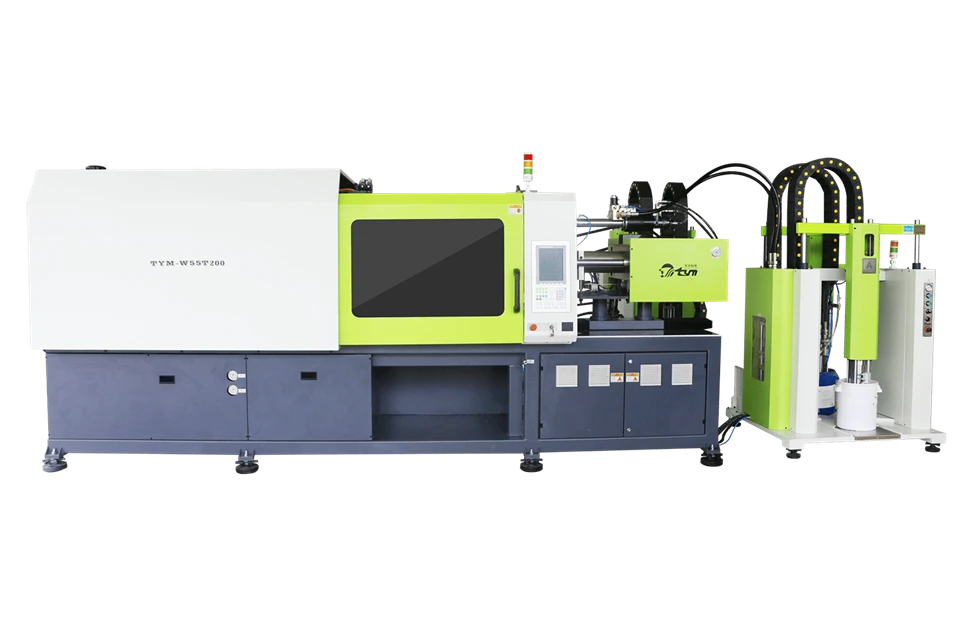

I get it—investing in a new machine is a big call, especially when you’re trying to keep production costs low. But here’s the thing: using the wrong machine for silicone electrical accessories isn’t just a small hiccup—it’s a risk to your brand, your customers, and even safety. I’ve seen electrical parts fail and cause house fires (thankfully no injuries, but still), and that all traces back to a machine that couldn’t handle the silicone material properly.
If you’re still on the fence, let me put it in simple terms: silicone electrical accessories need precise, consistent, contamination-free parts. That means a silicone machine that’s built for LSR, not a jack-of-all-trades. If you’re ready to upgrade, or just want to chat about what machine fits your specific electrical accessory needs—whether you’re making cable insulators, sensor gaskets, switch seals, or anything in between—reach out. We’re here to help, not just sell machines.
References:
- International Electrotechnical Commission (IEC) Standard 60664-1: Insulation coordination for equipment within low-voltage systems
- Society of Automotive Engineers (SAE) Standard AS50151: Silicone rubber materials for aerospace electrical components
- Manufacturing Insights Report: Liquid Silicone Rubber Processing for Electrical Applications, 2023