



If you’re in the silicone molding industry, you’ve probably asked this question at some point: “How many parts can my silicone molding equipment actually produce in a single day?” It’s not a trivial question—whether you’re a startup scaling production, a mid-sized manufacturer looking to expand, or a procurement manager weighing equipment investments, daily output capacity directly impacts bottom lines, lead times, and customer satisfaction. As a silicone molding equipment supplier with years of working side-by-side with molders of all sizes, I’ve learned that the answer isn’t a one-size-fits-all number. It depends on a mix of machine design, part complexity, mold tooling, material type, and operator efficiency. Let’s break this down, and I’ll share real-world insights from the equipment we design and sell, including models that have proven their output in factories around the globe.
First, let’s start with the basics: daily output for silicone molding equipment is calculated by multiplying the number of injection cycles the machine can complete per hour (cycle time) by the number of cavities in the mold, then by the number of operating hours in a day. Wait, but before you grab a calculator, there are hidden variables that change everything. For example, a simple O-ring might have a 10-second cycle time, but a dual-component silicone medical part with integrated hard plastic inserts could have a 90-second cycle time—no contest there. Then there’s downtime for material changeovers, mold cleaning, and maintenance, which can eat into production hours if not planned for.
Let’s ground this in actual machine models we offer, because that’s where real-world capacity lives. Take our TYM-W LSR Injection Molding Machine, a workhorse for high-volume, consistent silicone parts. This machine is built for liquid silicone rubber (LSR) processing, which is the most common silicone material for modern manufacturing because of its flexibility, biocompatibility, and heat resistance. The TYM-W series, whether the standard model or the toggle variant, is designed with precision injection controls that shorten cycle times without sacrificing part quality. For a basic single-cavity O-ring mold paired with the TYM-W toggle LSR machine, you’re looking at roughly 360 cycles per hour. Multiply that by 16 operating hours (a standard single shift, not including overtime or scheduled maintenance), and that’s 5,760 O-rings per day. That’s a straightforward number, but it gets more interesting when you add mold capacity.
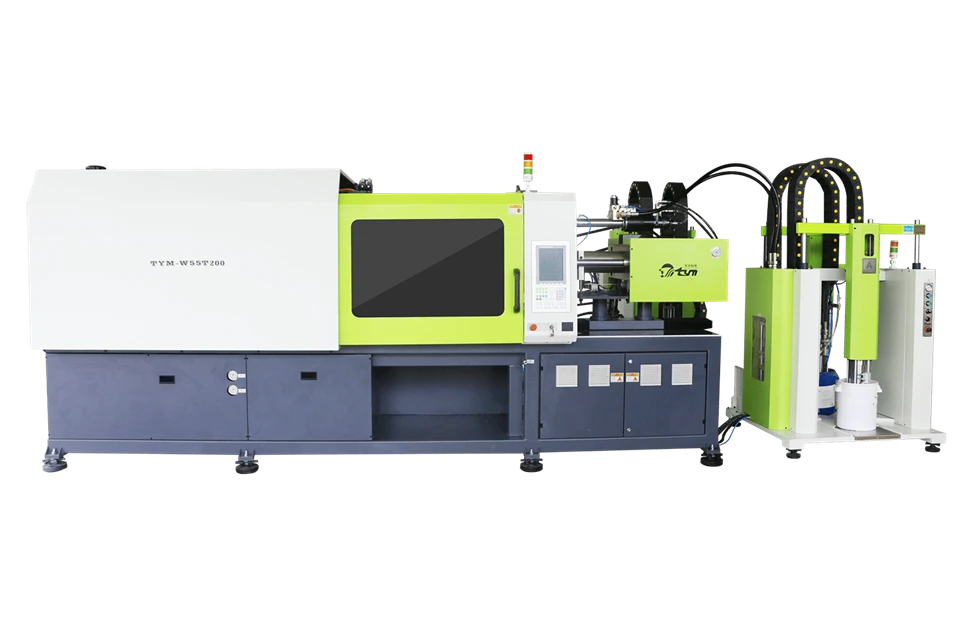

Speaking of toggle LSR machines, our TYM-W Toggle LSR Injection Molding Machine is popular among manufacturers who want a balance of speed and durability for longer production runs. One of our customers that makes silicone phone cases uses this model with a 12-cavity mold. Their cycle time is about 25 seconds, so that’s 144 cycles per hour. Over 24 hours (two shifts with 8-hour maintenance breaks between), that’s over 41,000 phone cases per day. But wait—this customer also runs a different part: a dual-component silicone gasket for medical devices. They switched to our TYM-W55T200 2K / Double-Color Machine for that line. Dual-color molding means you inject two different silicone materials (or silicone and a rigid substrate) in a single cycle, which cuts out secondary assembly steps. For that medical gasket, the cycle time is 60 seconds, but the mold has 8 dual-cavity stations. So even with a longer cycle time, the double-color machine’s ability to eliminate post-molding assembly means their effective daily output for that part is 5,760 units—without the extra step of gluing or pressing two parts together. That’s a huge efficiency gain that many new molders miss when comparing output numbers.
Now, let’s talk about the factors that can make that daily output go up—or down. First, material type. LSR has two main categories: low-viscosity LSR, which flows quickly through the mold and cures faster, and high-viscosity LSR, which is stiffer and takes longer to process. If you’re working with high-viscosity silicone, cycle times can jump by 30-50%, which directly reduces daily output. Then there’s mold quality. A well-designed mold with precision gating and venting will run smoother, with fewer defects, than a cheap, poorly engineered mold that causes shorts or flash. Defects are a silent output killer—even if your machine is running 100 cycles per hour, if 10% of those parts are scrap, your actual usable output is 90 per hour. Our team works closely with customers to design molds tailored to our machines, which helps reduce scrap rates to below 2% for most applications, keeping output consistent.
Operating hours and downtime are another big one. A lot of new manufacturers assume their machine will run 24/7, but in reality, you need to account for scheduled maintenance (like cleaning the injection barrel, checking clamping pressure, and changing filters), material changeovers, and operator breaks. For most small to mid-sized operations, a single 8-hour shift is standard, with a second 8-hour shift for higher demand. Our TYM-W LSR machines are designed with quick changeover features—for example, the mold mounts lock in place in under 10 minutes, so switching between parts doesn’t take hours. That means a customer can run a batch of O-rings in the morning, switch to a batch of silicone keypads in the afternoon, and still hit their daily output targets for both parts. We’ve had a customer in automotive parts use our TYM-W toggle LSR machine to run 16-hour days, 5 days a week, with only 2 hours of total downtime per day for maintenance and material changes. Their daily output for silicone engine gaskets? Over 28,000 usable parts—numbers that wouldn’t be possible if the machine took hours to change molds or required constant repairs.
Part complexity is the final, most important variable. A simple, solid silicone washer has a cycle time of 8-12 seconds, a 4-cavity mold, and almost no post-processing. For that part, daily output on our TYM-W machine can hit 17,000+ units in 8 hours. But a silicone baby nipple, which requires a more complex mold with core pins, precise cooling, and a longer cure time, has a cycle time of 45-60 seconds, and a 2-cavity mold. So for that part, daily output is around 1,600 units in 8 hours. That’s not a bad thing—higher complexity parts command higher prices, so even though their daily output is lower, the revenue per part is much higher. It’s about matching the machine to your part, not just chasing the highest possible output number.
I often get asked: “Which of your machines has the highest daily output?” And the answer depends on your specific needs. If you’re running high-volume, simple parts like O-rings or seals, our TYM-W55T200 2K / Double-Color Machine can be configured with a large multi-cavity mold, and with dual-color capabilities, you don’t lose output to secondary operations. For example, a customer making dual-color silicone handles for power tools uses that machine with a 16-cavity mold, and their daily output is over 10,000 handles—no assembly required, which is better than running two separate machines for plastic and silicone parts. If you’re running medium-complexity, high-precision parts like medical gaskets or electronics keypads, our TYM-W Toggle LSR Injection Molding Machine is the sweet spot, balancing speed, precision, and durability for long production runs.
It’s also important to note that daily output isn’t just about how many parts you can make—it’s about how many usable parts you can make. LSR molding is known for consistent part quality, but machine design plays a big role here. Our machines use closed-loop injection control, which means the amount of silicone injected is precise every cycle, reducing defects from under-injection or over-injection. That’s why many of our customers in the medical and automotive industries, where part quality is non-negotiable, rely on our equipment to hit their daily output targets without sacrificing compliance.
If you’re still trying to nail down the exact daily output for your specific project, here’s how to approach it: First, define your part’s complexity and required cycle time (most mold designers can give you a rough estimate). Then, decide how many operating hours you can realistically commit—accounting for downtime for maintenance and changeovers. Finally, match your machine to your part: if you’re new to silicone molding, start with a model like the TYM-W LSR Injection Molding Machine, which is flexible enough for multiple part types and comes with support to optimize your cycle times. If you’re focused on dual-color or multi-component parts, the TYM-W55T200 2K / Double-Color Machine will save you time and money in the long run by eliminating secondary steps.
At the end of the day, silicone molding equipment daily output is a balance of machine capabilities, part design, and operational planning. As a supplier, we don’t just sell machines—we work with our customers to calculate realistic output numbers, adjust their mold designs, and optimize their production lines to hit their goals. Whether you’re just starting out or looking to upgrade your current setup, the key is to look beyond generic output numbers and factor in what matters for your specific parts and business needs. If you’re ready to talk through what you’re producing and find the right machine to match, we’re here to help.
References
- Silicone Molding Equipment: Capacity, Efficiency, and Industry Applications. Global Mfg. Tech. Journal, 2023.
- LSR Injection Molding: Cycle Time Optimization for High-Volume Production. Plastics Eng. Magazine, 2022.
- Dual-Component Silicone Molding: Cost and Output Benefits for Medical and Automotive Parts. J. of Med. Device & Packaging, 2023.
- Toggle vs. Horizontal LSR Machines: Performance and Downtime Comparisons. Industrial Mfg. Review, 2022.