



Hey there! As a supplier of silicone machines, I often get asked about the difference between vertical and horizontal silicone machines. It's a great question, and I'm here to break it down for you in a way that's easy to understand.
Basic Design and Structure
First off, let's talk about the basic design. A vertical silicone machine, as the name implies, has a vertical clamping unit. Picture it like a sandwich where the mold is held between two plates that move up and down. This setup is really handy when you need to insert parts into the mold. You can easily place inserts from the top, and gravity helps keep them in place during the molding process.
On the flip side, a horizontal silicone machine has a horizontal clamping unit. The mold plates move horizontally, kind of like a sliding door. This design is more common in high - volume production because it's easier to integrate with automated conveyor systems. You can have a smooth flow of parts in and out of the machine, which speeds up the overall manufacturing process.
Molding Process and Applications
When it comes to the molding process, vertical and horizontal machines have their own sweet spots.

Vertical Silicone Machines
Vertical machines are often used for insert molding. If you're making something like a medical device that has a metal or plastic insert inside the silicone part, a vertical machine is a top choice. You can precisely place the insert into the mold cavity, and the vertical clamping force ensures a tight seal around it. This results in a high - quality, well - bonded part.
Another application is for products with complex geometries or small components. Since you have easy access to the mold from the top, it's simpler to work with intricate designs or add additional features during the molding process. For example, if you're making custom - shaped silicone buttons, a vertical machine can help you achieve the desired precision.
Horizontal Silicone Machines
Horizontal machines shine in mass production scenarios. They're ideal for making standard - sized silicone products like gaskets, O - rings, and seals. The horizontal configuration allows for efficient ejection of the finished parts onto a conveyor belt or a collection system. This reduces the time between cycles and increases the overall production rate.
Also, horizontal machines are great for multi - cavity molds. You can have several mold cavities side by side, and the machine can inject silicone into all of them simultaneously. This significantly boosts productivity, which is crucial for large - scale manufacturing operations.
Advantages and Disadvantages
Vertical Silicone Machines
Advantages
- Easy insert placement: As mentioned earlier, inserting parts into the mold is a breeze. This saves time and reduces the risk of misplacement, leading to higher product quality.
- Space - efficient: They usually take up less floor space compared to horizontal machines. If you have a small manufacturing facility, a vertical machine can be a great space - saving solution.
- Good for small - batch production: You can quickly set up and change molds for different products, making them suitable for producing small quantities of custom parts.
Disadvantages
- Lower production speed: Compared to horizontal machines, the cycle times are generally longer. This is because the loading and unloading of parts can take more time, especially if done manually.
- Limited automation options: While there are automated vertical machines available, integrating them with full - scale automated production lines can be more challenging than with horizontal machines.
Horizontal Silicone Machines
Advantages
- High production speed: The horizontal design allows for fast part ejection and easy integration with automation systems. This results in shorter cycle times and higher output rates.
- Better for large - scale production: With the ability to use multi - cavity molds and automated handling, horizontal machines are the go - to choice for mass - producing silicone products.
- Wider range of automation options: You can easily connect them to robotic arms, conveyor belts, and other automated equipment for a seamless production process.
Disadvantages
- Higher initial investment: Horizontal machines are typically more expensive to purchase and install. This can be a significant barrier for small - scale manufacturers or startups.
- Larger floor space requirement: They need more room to operate, which can be an issue if you have limited space in your factory.
Our Products
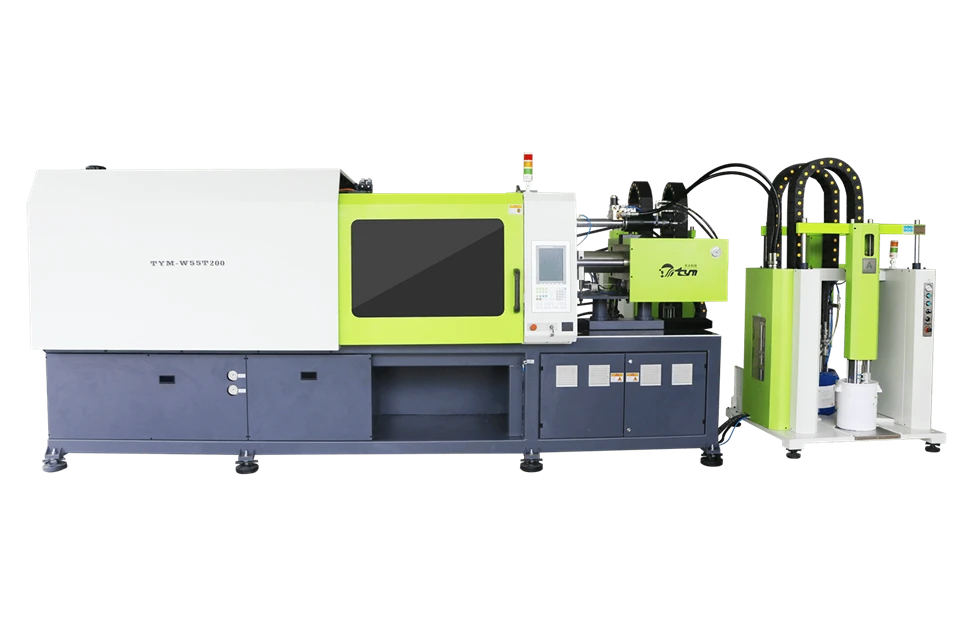
As a supplier, we offer a range of both vertical and horizontal silicone machines to meet different customer needs. For example, our TYM-W Toggle LSR Injection Molding Machine is a great horizontal option. It's designed for high - precision LSR (Liquid Silicone Rubber) molding, with advanced control systems that ensure consistent product quality.
Another popular product is our TYM-W55T200 2K / Double - Color Machine. This horizontal machine allows you to create double - color silicone products, which is perfect for adding unique features or branding to your items.
We also have the TYM-W LSR Injection Molding Machine, which is known for its reliability and efficiency in large - scale production.
Which One Should You Choose?
The choice between a vertical and horizontal silicone machine depends on your specific manufacturing requirements. If you're doing a lot of insert molding, small - batch production, or have limited space, a vertical machine might be the way to go. On the other hand, if you're focused on high - volume production, mass - producing standard parts, and want to take advantage of automation, a horizontal machine is probably a better fit.
Let's Talk!
If you're in the market for a silicone machine and need help deciding which type is right for you, or if you have any questions about our products, don't hesitate to reach out. We're here to assist you in finding the perfect solution for your manufacturing needs.
References
- General knowledge in the silicone machine manufacturing industry
- Product specifications and research on vertical and horizontal silicone machines