



Hey there! As a supplier of LSR molders, I often get asked about the difference between horizontal and vertical LSR molders. So, I thought I'd write this blog to break it down for you in a simple and easy - to - understand way.
How They Look and Work
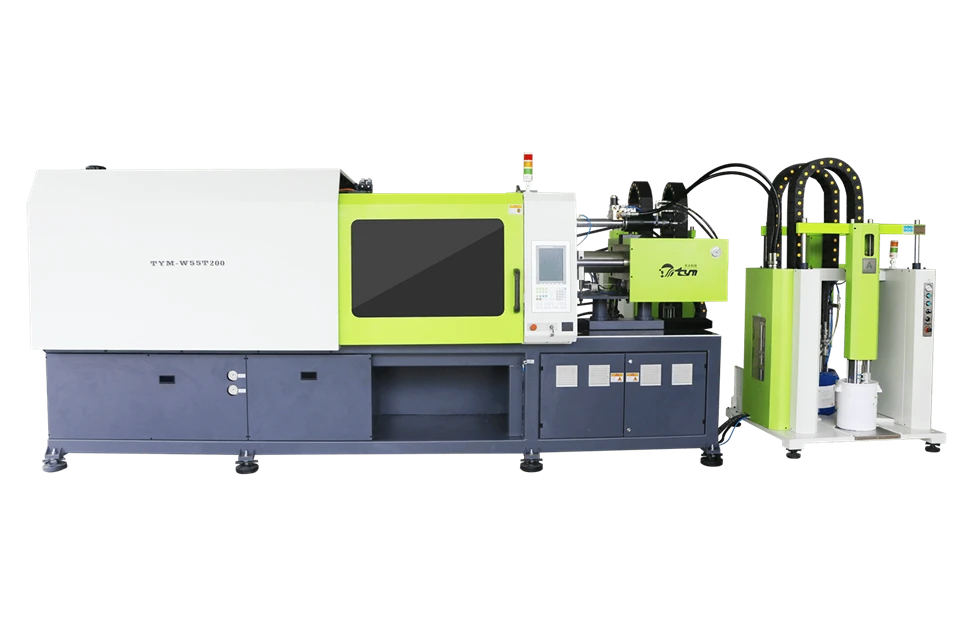
Let's start with the basics. Horizontal LSR molders, as the name suggests, have a horizontal layout. The clamping unit and the injection unit are arranged side by side. Picture it like a long, flat machine where the plastic material gets injected horizontally into the mold.
On the other hand, vertical LSR molders have a vertical setup. The clamping unit is on top, and the injection unit is usually at the bottom or the side. It's like a tall, upright machine.
This difference in layout affects how the machines operate. In a horizontal molder, the mold opens and closes horizontally. It's great for large - scale production because it's easy to integrate with other equipment on a production line. You can easily add conveyors to move the finished parts away, and it's also easier to automate the process.
With a vertical molder, the mold opens and closes vertically. This is really handy when you need to insert parts into the mold manually. For example, if you're making a product that has an insert like a metal piece, it's much easier to place it in a vertical mold because gravity helps keep it in place.
Product Applications
The type of products you can make also varies between horizontal and vertical LSR molders.
Horizontal LSR molders are often used for mass - producing small to medium - sized parts. Think about things like O - rings, gaskets, and small medical components. These machines can churn out a large number of identical parts quickly and efficiently. For instance, if you're in the business of making O - rings for automotive engines, a horizontal molder can produce them in high volumes with consistent quality.
Vertical LSR molders, however, are more suitable for products that require inserts or have a more complex design. For example, if you're making a plastic part with an embedded metal connector, a vertical molder allows you to place the metal insert in the mold before the injection process. This is also common in the electronics industry, where you might need to insert circuit boards or other components into plastic casings.
Advantages of Horizontal LSR Molders
One of the biggest advantages of horizontal LSR molders is their high - speed production capabilities. They can cycle through the injection, cooling, and ejection process very quickly. This means you can produce a large number of parts in a short amount of time, which is great for meeting high - volume orders.
Another plus is the ease of automation. Since the machine has a horizontal layout, it's straightforward to connect it to other automated equipment. You can use robots to remove the finished parts, load new molds, and even perform quality checks. This not only increases productivity but also reduces the chances of human error.
Horizontal LSR molders also offer better access to the mold. When it comes to maintenance or changing the mold, it's easier to reach and work on a horizontal mold compared to a vertical one.
Some of our popular horizontal LSR molding machines include the TYM - W Toggle LSR Injection Molding Machine, the TYM - W LSR Injection Molding Machine, and the TYM - W55T200 2K / Double - Color Machine. These machines are known for their reliability and high - performance in horizontal LSR molding.
Advantages of Vertical LSR Molders
Vertical LSR molders shine when it comes to insert molding. As I mentioned earlier, the vertical layout makes it easier to place inserts in the mold. This can save a lot of time and effort, especially when dealing with complex parts.
They also take up less floor space compared to horizontal molders. If you have a small factory or limited space, a vertical molder can be a great option. You can stack multiple vertical molders on top of each other or place them in a more compact area.
In addition, vertical LSR molders are often more cost - effective for small - batch production. Since they're easier to set up and operate for smaller runs, you don't have to invest in a large - scale production line.
Cost Considerations
When it comes to cost, both horizontal and vertical LSR molders have their own factors to consider.
Horizontal LSR molders usually have a higher upfront cost. This is because they're more complex machines, especially when it comes to automation. However, the long - term cost can be lower if you're producing large volumes. The high - speed production and efficiency can offset the initial investment over time.
Vertical LSR molders, on the other hand, are generally more affordable to purchase. They're also cheaper to operate for small - batch production. But if you need to scale up your production, you might end up needing multiple vertical molders, which could increase the overall cost.
Which One to Choose?
So, how do you decide between a horizontal and a vertical LSR molder? It really depends on your specific needs.
If you're in the business of mass - producing simple parts, a horizontal molder is probably the way to go. Its high - speed production and ease of automation will help you meet your production targets efficiently.
If you're making parts with inserts or have a limited production space, a vertical molder could be the better choice. It offers more flexibility for insert molding and is more suitable for small - batch production.
As a supplier of LSR molders, I'm here to help you make the right decision. Whether you need a horizontal or vertical molder, we have a range of options to meet your requirements. If you're interested in learning more about our products or have any questions, don't hesitate to reach out. We can discuss your specific needs and find the perfect LSR molder for your business.

Conclusion
In conclusion, horizontal and vertical LSR molders have their own unique features and advantages. Understanding the differences between them is crucial for choosing the right machine for your production needs. Whether it's the high - speed production of horizontal molders or the insert - molding capabilities of vertical molders, each type has its place in the manufacturing industry.
If you're looking to invest in an LSR molder, take the time to evaluate your production requirements, budget, and available space. And remember, I'm here to assist you every step of the way. Let's have a chat and figure out the best solution for your business.
References
- Injection Molding Handbook, by O. Olajide
- Plastics Processing Technology, by S. Fakirov